
Criminal Cases in the Jefferson County Courts
Iowa District Court is the unified trial court for Jefferson County. It handles indictable felonies and misdemeanors, simple misdemeanors, and traffic matters. Iowa does not split these files between a county court and a separate felony court. Cities in Jefferson County also lack a distinct municipal criminal docket like those used in some states. State charges, city citations, and related case events move through Iowa's court structure.
The Jefferson County Clerk of District Court maintains the local trial files. The office is on the second floor at 51 E. Briggs Avenue, Suite 5, Fairfield, IA 52556. Its phone is 641-472-3454, and the counter is open Monday through Friday from 8 a.m. to noon and 1 to 4:30 p.m. The clerk records filings, court orders, fines, scheduled violations, and final dispositions. It also provides the courthouse terminal used to view public trial documents.
Jefferson County Docket Search Fields
The free Iowa Courts Online Electronic Docket Record Search supports either a name search or a case and citation number search. Choosing Jefferson in the county field keeps the result set local. Names need at least two characters in both the first and last fields. A complete case ID is the better key when it is known because common names can return unrelated people.
| Field label | Type | Required | Options or format |
|---|---|---|---|
| Search mode | Radio or tab | Yes | By Name or By Case or Citation Number |
| Case Type | Dropdown | No | Choose criminal when available |
| County | Dropdown | No, but useful | Select Jefferson |
| First and Last Name | Text | For name search | At least two characters each |
| Case ID | Text | Alternative | Enter the full ID |
| Citation Number | Text | Alternative | Full number, or last four to six digits in payment search |
Open a result through its blue Case ID link. Bracketed links are free. Other links may require the courthouse terminal or a paid subscription. Match the court, filing date, and case number before drawing a conclusion from a name.
How to Search Case Records
A careful search separates the public index from the public documents behind it. The online docket is the first stop for modern Jefferson County criminal case records. The clerk is the next stop for a pleading, order, judgment, or older file. Use both channels when the outcome matters.
- Open Iowa Courts Online and choose the public search. Select Jefferson County and the criminal case type when the controls provide those choices.
- Search with a first and last name, complete case ID, or citation number. Add more letters to narrow a common-name result.
- Open the blue Case ID. Check the court, case title, charge, filing date, and party details that are public.
- Read the docket in date order. Look for the disposition of each charge, not merely the first accusation or an old hearing entry.
- Contact the Jefferson County clerk for public documents, certified copies, or a file that predates online coverage. Ask about current copy costs before ordering.
New cases generally take one business day to appear. Once listed, data updates in real time, although a paper sent to the clerk can take several days to be entered. The free court index covers public post-1998 trial cases and some older matters.
Jefferson Courthouse Document Access
A frequent Jefferson County search mistake is assuming a paid online account opens scanned case papers. It does not. The $25 monthly advanced subscription adds scheduling, judgments and liens, exhibits, bonds, service returns, traffic detail, and more complete financial data. Public trial documents remain available through the terminal in the county where the case was filed.
The Jefferson courthouse terminal is therefore useful when a docket label is too short to explain an order. The official reporter guide states a public document copy cost of $0.50 per page. Ask the clerk about certification and the current total before a copy is made. For a pre-1998 file that is absent online, give the clerk a name, estimated year, and any known case number. The noon-to-1 p.m. counter closure matters when planning an in-person search.
Note: Paid advanced access adds docket data, but it does not grant remote access to Jefferson County trial documents.
What the Case File Shows
The case file documents the court process, not just the event that led to it. A police or sheriff report may describe probable cause. The court file instead shows the charge that the Jefferson County Attorney chose to pursue, the hearings and filings that followed, and the legal result. The Iowa docket inventory identifies the fields readers should check first.
| Case ID and Court | The unique case key, Jefferson County venue, case type, filing information, and current status. |
|---|---|
| Parties and Lawyers | Public party names and counsel; the State of Iowa is the prosecuting party in a state criminal case. |
| Charges | Filed criminal charge descriptions with a separate disposition entry for each charge where recorded. |
| Docket Entries | A dated log of filings, hearings, orders, and proceedings. |
| Financial Data | Fines and fees owed plus payments in free data; fuller details may require advanced or terminal access. |
| Judgment and Sentence | The final result and court-ordered consequence, which may include confinement, probation, restitution, or a suspended term. |
Do not treat a charge line as the outcome. A charge may end in conviction, dismissal, acquittal, or deferred judgment. The last event is not always the disposition either, so find the specific outcome field and any later order that changes it.
Reading Jefferson County Case Outcomes
Three terms prevent many errors. A disposition is the result of a charge or case. A dismissal ends the charge without a judgment of guilt. A conviction is a judgment of guilt after a plea or verdict. A deferred judgment is different: the court postpones judgment under set conditions, and successful discharge has special record effects under Iowa law.
- Trial information
- Iowa's prosecutor-filed charging instrument for an indictable offense when the case proceeds without a grand-jury indictment.
- Arraignment
- The court event where the formal charge is presented and a plea is entered.
- Disposition
- The recorded outcome, such as conviction, dismissal, acquittal, or deferred judgment.
- Suspended sentence
- A sentence the court pronounces but holds back while the person follows ordered conditions.
Read each charge separately because one Jefferson County case may contain more than one count with different outcomes. If a docket appears inconsistent with a certified order, ask the clerk to identify the controlling entry. Questions about a DCI rap sheet belong with DCI, since the state repository compilation is not the same record as the clerk's file.
Stages of a Criminal Case
Law enforcement first submits its reports. An initial appearance addresses the accusation, rights, counsel, and release. The Jefferson County Attorney decides which state charge to file. An indictable case then proceeds through a trial information or indictment, arraignment, discovery, and pretrial motions. A plea or trial determines whether the process reaches a finding of guilt.
Case flow: Charges Filed › Arraignment › Pretrial › Plea or Trial › Disposition › Sentencing
After guilt, corrections may prepare a presentence investigation and victims may submit impact statements. Jefferson County's published process says sentencing commonly occurs two to six weeks after a plea or verdict. The local options it describes include an imposed sentence, suspended sentence, deferred judgment, probation, and incarceration. Appeal, reconsideration, supervision, or parole may follow.
Jefferson Sentences Across Record Systems
A Jefferson County judgment can create records beyond the court file. The Iowa Department of Corrections district map shows the correctional-services structure that carries out prison and community supervision after a court order.
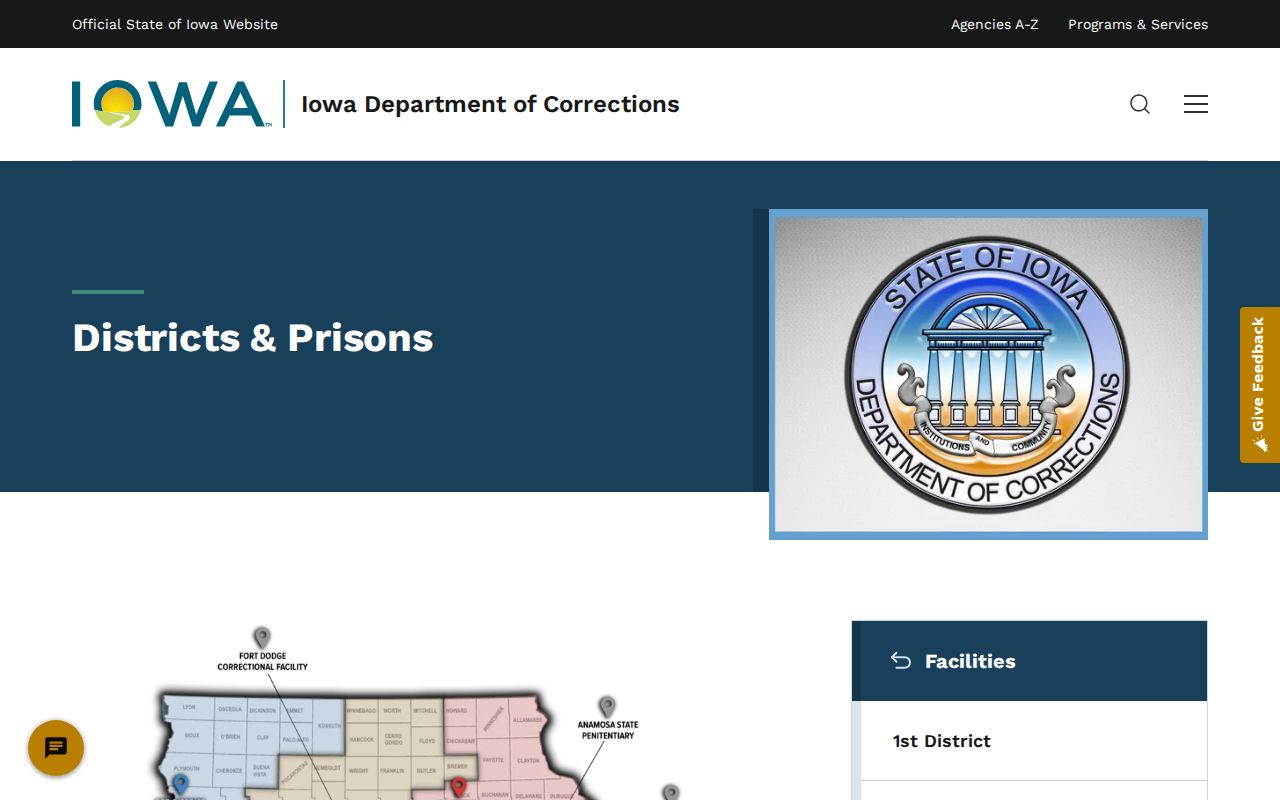
The district view helps explain why a sentence may be entered by the Jefferson County court while probation, parole, or other supervision data is maintained in a separate corrections system.
The official Iowa offender search instructions describe the fields used to locate people in prison or community programs after a criminal court case.
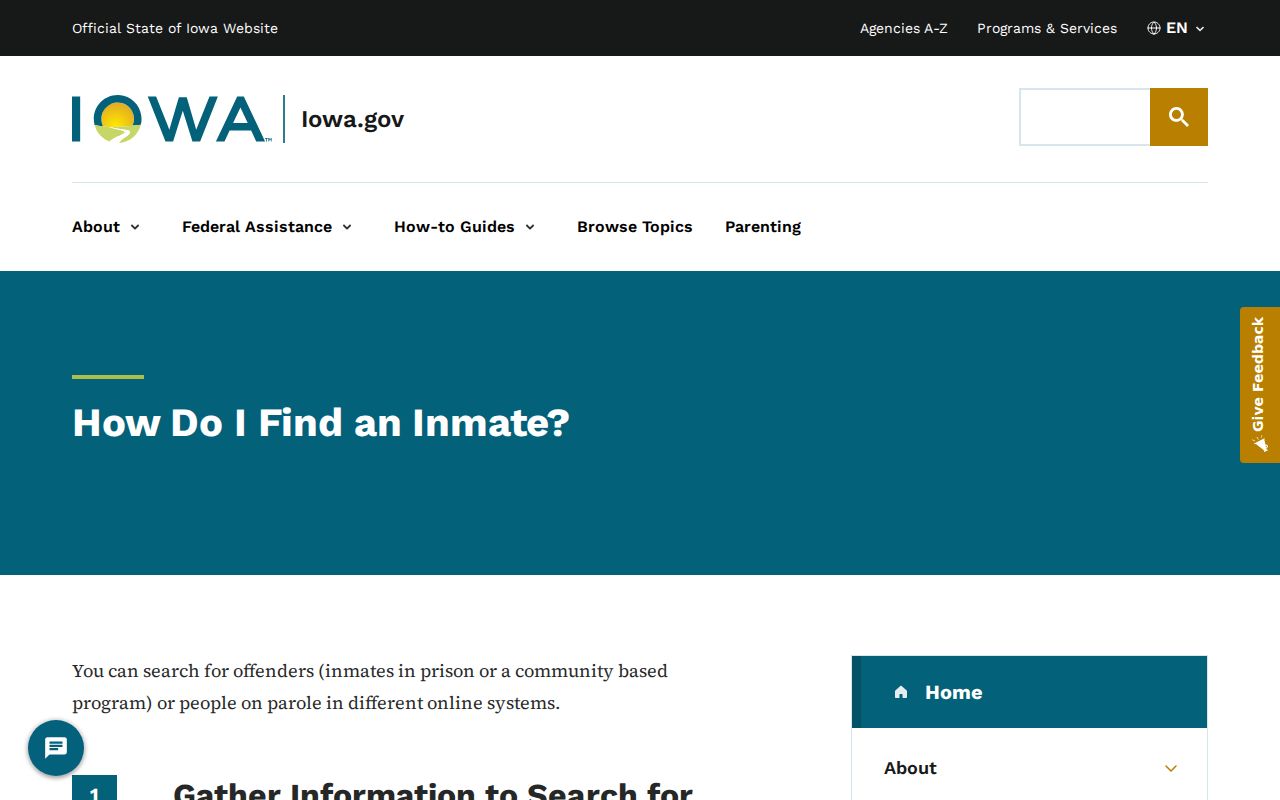
An offender-search result may show custody or supervision status, but the Jefferson County court docket remains the source for the filed charge, disposition, and sentence order.
Jefferson Court Orders and Registry Records
Some convictions can lead to a distinct statutory registration record. The Iowa Sex Offender Registry search illustrates that separate public system and its search controls.
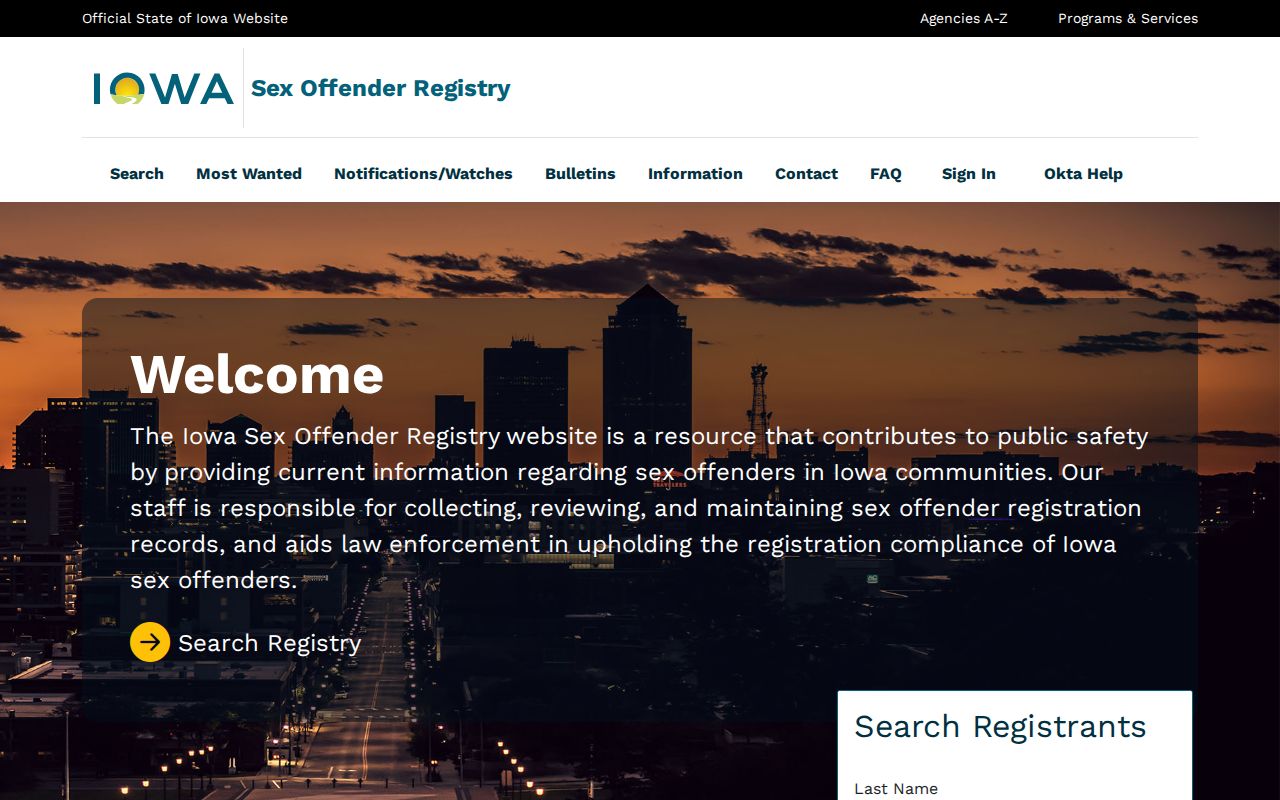
The registry is not a substitute for the Jefferson County criminal case file because it serves a different legal purpose and does not reproduce the full docket.
The registry's official county information view groups public registration data by county.
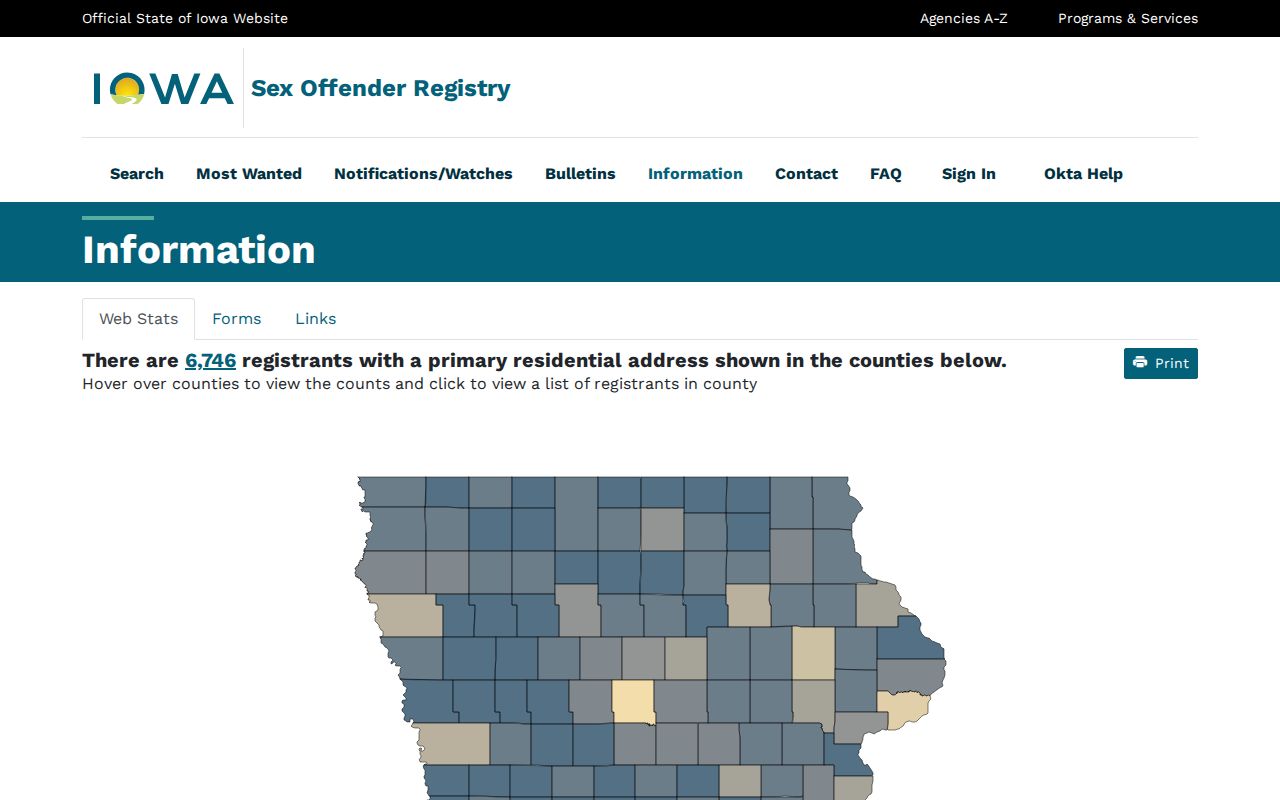
A county registry count cannot reveal the motions, plea, judgment, or sentencing papers contained in an individual Jefferson County court file.
The official registry search and watch explanation describes public lookup and address-watch tools.
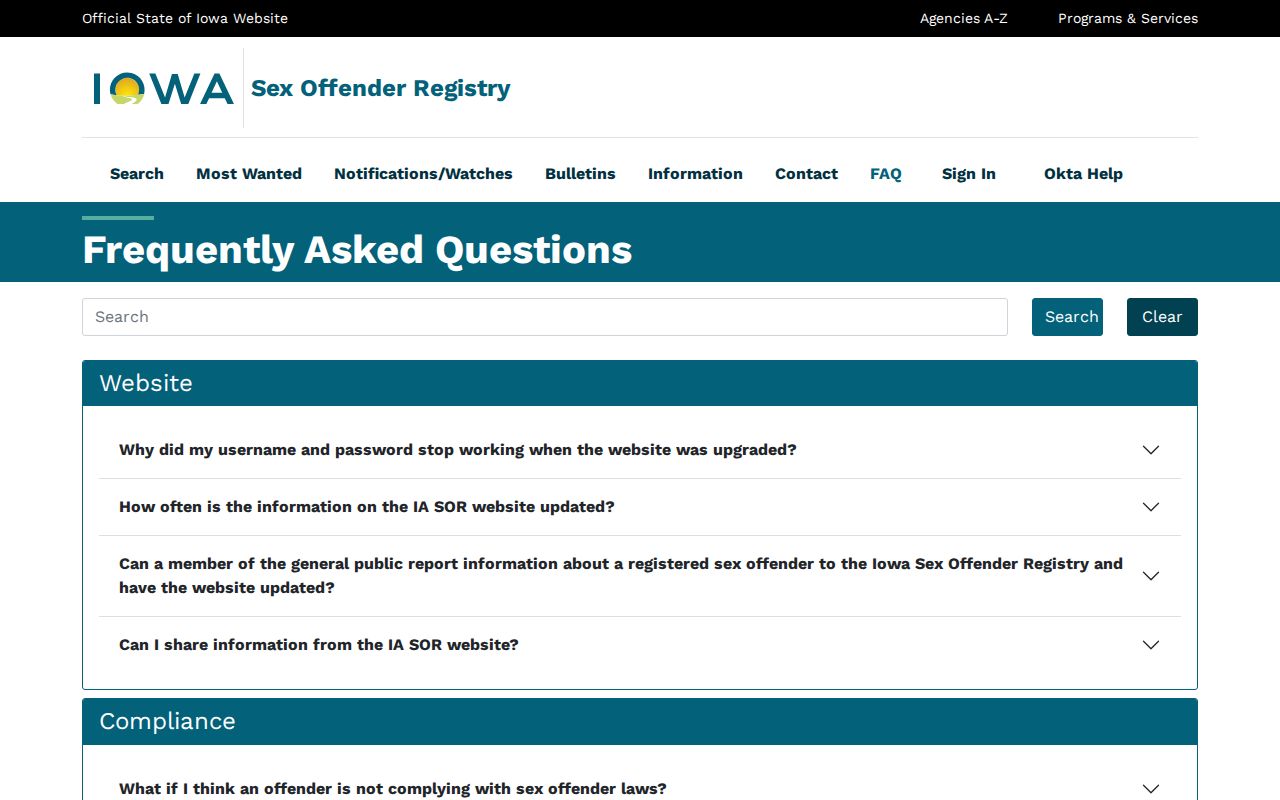
Those tools serve public registration and notice needs, while a case outcome must still be verified in Iowa Courts Online and with the Jefferson County clerk.
The registry also maintains an official noncompliant and absconder interface apart from ordinary court-case searching.
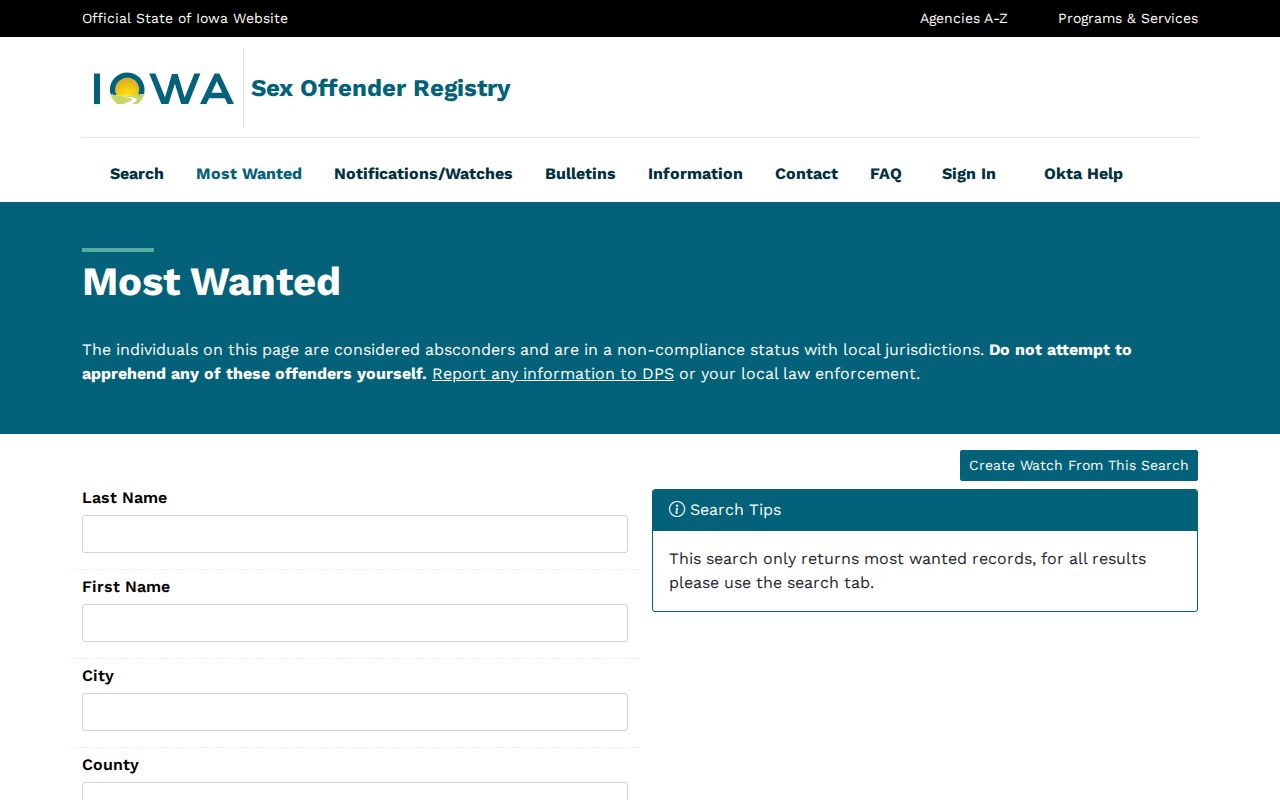
A listing there concerns registry compliance, not a complete account of the original Jefferson County prosecution or every later court event.
Access & Restrictions
Iowa's public-access rules make many court indexes and trial records open, but not every case or field. Juvenile and confidential cases are excluded from Iowa Courts Online. Protected identifiers, victim information, medical details, and other material can be withheld or redacted. A redaction removes protected content while leaving the segregable public part available.
Iowa Code chapter 22 supports inspection and copying of public records while preserving statutory confidentiality. Court access also follows Iowa Judicial Branch public-access rules.
A missing online result can mean the case is confidential, older than the electronic boundary, newly filed, entered under a different name, or not filed in Jefferson County. Ask the clerk about the record rather than assuming it does not exist. For qualifying dismissals, not-guilty outcomes, or limited misdemeanors, Iowa Code chapter 901C may provide expungement. Eligibility is narrow and depends on the exact disposition and statutory conditions.
When the court file follows a recent booking, the Jefferson County arrest history explains the jail and agency channels that precede formal charges. Keep the booking allegation and the court result separate.